
New Electricity Tariffs Makes Solar a No-Brainer
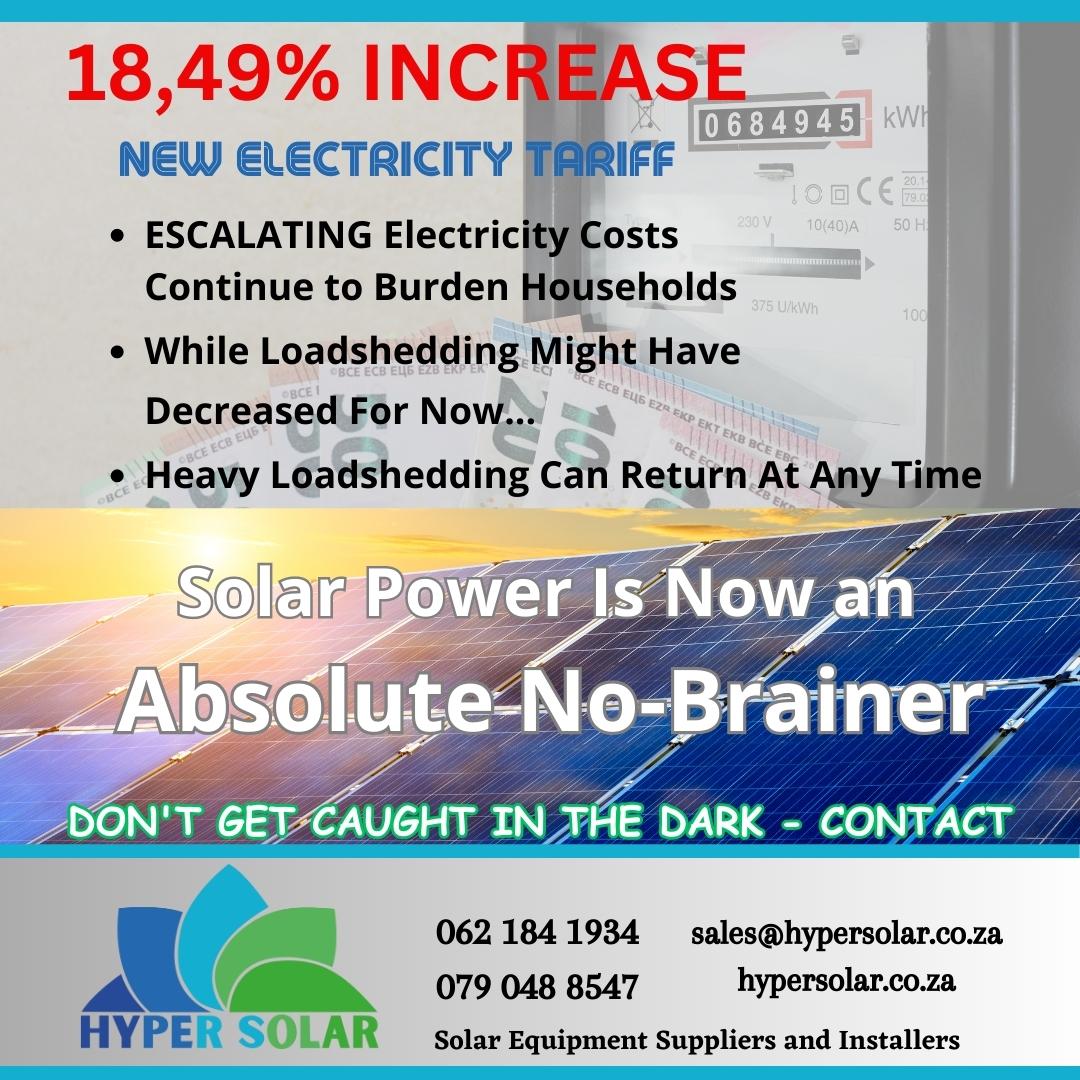
As South Africa grapples with loadshedding and escalating electricity costs, finding alternative power solutions has become a pressing need for many consumers.
The recent surge in electricity tariffs across various Metros since July 2023 has made it clear that relying solely on traditional power sources is no longer financially viable.
Solar energy has emerged as an absolute no-brainer in the
face of increasing electricity costs.
Understanding the Impact of Tariff Increases
The National Energy Regulator of South Africa (NERSA) has implemented significant increases in electricity tariffs, despite pleas from President Cyril Ramaphosa for a suspension due to rising living costs and increased severity of load-shedding.
The 2023/24 financial year alone has seen an average hike of 18.65% in electricity tariffs, with further increases of 12.74% planned for the following year.
The impact of these tariff increases varies across the country, with eThekwini facing the highest increase. Below are the increases implemented from this month for each of the major metros from highest to lowest:
- eThekwini: 18.49%
- City of Cape Town: 17.6%
- Tshwane: 15.1%
- Buffalo City: 15.1%
- Ekurhuleni: 14.98%
- City of Joburg: 14.97%
Stage 8 Loadshedding is Still a Possibility
Earlier this week, Eskom indicated that the possibility of stage 8 load-shedding in winter still exists, although it is less probable compared to lower levels of rotational power cuts.
Although Eskom had witnessed an overall improvement in its energy availability factor for several weeks, recent breakdowns have had a detrimental impact on the utility’s generation capacity.
Experts have cautioned that South Africa could endure a prolonged period of electricity shortages during the cold winter months, as colder weather typically leads to increased household electricity consumption.
However, the country has experienced fewer instances of load-shedding during winter when compared to the first few months of the year.
Eskom attributes this to various factors, including reduced demand, enhanced generation capacity, increased deliveries of diesel for open-cycle gas turbines, and unusually warmer weather.
While these factors have resulted in reduced load-shedding and minimal daytime power cuts, some of these conditions have now changed.
Eskom has intermittently escalated the severity of load-shedding in the past week and recently announced a return to stage 6 load-shedding on Wednesday morning.
The increased load-shedding became necessary due to sustained high demand and failures of certain generator units. Additionally, the country is currently experiencing colder weather, which is expected to persist throughout the week.
Eskom acknowledges that cold weather drives up electricity demand but states that the demand was anticipated, and measures were in place to address it.
On July 10, 2023, the electricity demand exceeded expectations. The System Operator is obligated to maintain generation reserves for unforeseen events, and on Monday, these reserves were utilized to meet the higher-than-anticipated demand.
Eskom further explains that the electricity demand for the remainder of winter will largely depend on the severity of cold weather in the upcoming weeks and the available generation capacity at that time.
“While less likely, considering the current performance of the Eskom generation fleet, stage 8 load-shedding is still a possibility this winter,” the utility emphasizes.
“During warmer periods, load-shedding of stage 3 to 4 can be expected, but during colder periods, this may escalate. If a cold spell coincides with multiple generator failures, higher stages of load-shedding may be necessary but only for a short duration.”
Embracing a Sustainable Future
The combination of escalating electricity tariffs and increased levels of loadshedding has made solar energy a very important decision for South African households and businesses.
By transitioning to solar power, individuals can reduce their reliance on the power grid, get relieve from loadshedding, contribute to a greener future, and mitigate the financial burden of rising electricity costs.
Do You Need Solar or Have Questions?
Complete Your Details on the Form
and We Will Contact You
In a Hurry? No Worries.
You can Give us a Call on:
Or WhatsApp Us Here
Related Posts
How To Beat Eskom’s Increases And Save

The 2024 Loadshedding Outlook is Code Red

Solar Systems in South Africa – Why Cheaper is Not Always Better
